

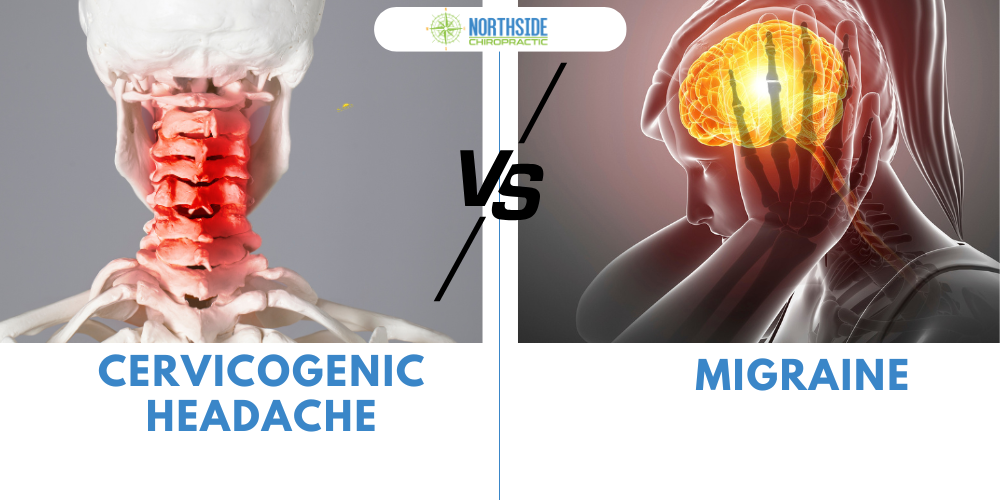
Not all headaches are created equal. If you’ve been battling frequent head pain, it’s critical to understand whether your symptoms point to a migraine or a cervicogenic headache. Both can cause intense discomfort, but their origins, symptoms, and treatments differ—sometimes dramatically. Knowing the difference could change how you manage your pain and which specialist you choose to see.
What Is a Migraine?
Migraines are a neurological condition that often produces throbbing or pulsating pain, typically on one side of the head. Migraines may last anywhere from a few hours to several days and are often accompanied by:
- Nausea or vomiting
- Sensitivity to light and sound
- Visual disturbances (auras)
- Hormonal or environmental triggers
They may be episodic or chronic and often have specific triggers such as stress, certain foods, weather changes, or hormonal shifts.
What Is a Cervicogenic Headache?
A cervicogenic headache is a secondary headache—meaning it is caused by an issue elsewhere in the body, specifically the cervical spine. These headaches originate from musculoskeletal issues in the neck and upper back, including:
- Dysfunction in the upper cervical joints (C1–C3)
- Muscle tightness or trigger points
- Poor posture or prolonged neck strain
- Past trauma or whiplash injuries
Common Cervicogenic Headache Symptoms:
- Ache or pressure that starts at the base of the skull and moves toward the front of the head
- Pain on one side of the head that doesn’t switch sides
- Headaches that get worse after sitting or looking down for long periods
- Stiff neck or feeling like your neck is “locked up”
- Feeling like the headache is “coming from your neck” rather than your head
Understanding cervicogenic headache causes is essential in determining the right treatment. Unlike migraines, these headaches typically won’t respond well to medications alone.
Cervicogenic Headache vs Migraine: How to Tell the Difference
| Feature | Cervicogenic Headache | Migraine |
|---|---|---|
| Where it starts | Neck or base of skull | Forehead, temple, or behind eyes |
| Pain type | Dull ache or pressure | Throbbing or pulsing |
| Which side | One side (same every time) | One or both sides, can switch |
| Triggers | Neck movement, bad posture, and driving | Bright lights, certain foods, stress |
| Other symptoms | Stiff neck, limited motion, eye pain | Nausea, light sensitivity, auras |
| Feels like | “Pain from the neck up” | “Pain inside the head or brain” |
It’s possible to have both types of headaches, which further complicates self-diagnosis. Keeping a symptom diary that tracks neck activity, pain location, and associated features can be helpful.
Many patients feel confused by overlapping symptoms — but studies now show it’s possible to tell them apart. According to a systematic review in BMC Musculoskeletal Disorders, specific physical tests like the FRT and neck strength assessments are key to identifying whether your pain is cervicogenic or migraine-based.
The Flexion-Rotation Test (FRT) involves gently turning your head while it’s flexed forward to assess movement in your upper neck. A limited range of motion here is a strong indicator of cervicogenic headache. Neck flexion strength tests, on the other hand, measure how well your deep neck muscles function — weakness in these muscles often points to cervicogenic origin, not migraine.
These are simple, non-invasive tests performed during a physical exam — and they often reveal what imaging or symptom checklists can’t.
Why Cervicogenic Headaches Are Often Misdiagnosed
Because both headache types can cause intense one-sided pain and fatigue, cervicogenic headaches are often mistaken for migraines. Unfortunately, this can lead to ineffective treatments—relying solely on migraine medications when what’s really needed is manual therapy or spinal correction.
Missing the cervicogenic diagnosis means the underlying neck dysfunction continues to cause pain, leaving patients frustrated and without long-term relief.
Effective Cervicogenic Headache Treatment Options
Unlike migraines, cervicogenic headaches tend to respond extremely well to physical-based care. The most effective approaches address both the muscular and skeletal contributors, such as:
- Chiropractic adjustments of the cervical spine (especially C1–C3)
- Postural correction and ergonomic training
- Myofascial release or trigger point therapy
- Corrective exercises to support spinal alignment
If you’ve experienced neck pain alongside headaches—or noticed your symptoms worsen after sitting too long, sleeping wrong, or looking over your shoulder—it may be time to explore targeted cervicogenic headache treatment.
Request an Appointment at Northside Chiropractic
When to See a Chiropractor for Headaches
If your headaches consistently start in your neck, radiate forward, or are worsened by movement, a chiropractor trained in spinal and musculoskeletal care can be a valuable ally.
Our patients at Northside Chiropractic often complain that they’ve dealt with years of migraine diagnoses—only to discover their headaches were actually linked to cervical spine dysfunction. Many of the patients we handle with cervicogenic headaches specifically mention:
- “It feels like something’s pulling from the back of my neck to my eye.”
- “Turning my head makes it worse, especially when driving.”
- “The headache always starts in my neck before I even feel it in my head.”
Whether you’re searching for a headache chiropractor, neck pain chiropractor, or specifically a cervicogenic headache chiropractor, we focus on treating the root cause.

Early intervention can prevent headaches from becoming chronic and reduce reliance on medication. An accurate diagnosis leads to faster, more lasting relief.
FAQs
Can someone have both migraine and cervicogenic headache at the same time?
Yes. Some people are diagnosed with migraines but also have neck-related dysfunction contributing to cervicogenic headaches. Proper evaluation by a neck pain chiropractor or headache chiropractor can help determine whether both are contributing.
How can you tell if your headache that mimics a migraine is actually cervicogenic?
Look for key signs: pain that starts at the base of your neck, gets worse with head movement, and stays on one side. If your headache feels like it’s coming from your neck or always follows stiffness or poor posture, it may be cervicogenic.
Why am I only told I have migraines, when I always wake up with neck stiffness and headaches afterward?
Migraines are commonly diagnosed, but if your pain always follows neck tension, awkward sleeping positions, or long hours looking down, it could be misdiagnosed. Many of our patients find out their headaches were actually from the neck.
Can nausea and feeling queasy happen with cervicogenic headaches?
Yes, though it’s less common. Some people feel light nausea when the neck tension is extreme, especially if the pain radiates toward the eyes. But strong nausea is more common with migraines.
Final Thoughts
Understanding the difference between cervicogenic headache vs migraine is more than just medical trivia—it’s the key to finding the right treatment and getting your life back.
If you’ve tried migraine medications with little relief—or if your headache always seems to start in your neck—it’s time to dig deeper. With the right diagnosis and care, long-term relief is within reach.
Need answers about your head pain? Request an appointment with Dr. Dustin McIver at Northside Chiropractic in Grand Rapids — and find out what your head pain is really telling you.
Dr. Dustin McIver is a husband, father, and artistic Chiropractor. His creativity and passion for helping others to heal, live and evolve naturally is his driving purpose as well as facilitating a space for healing.
