

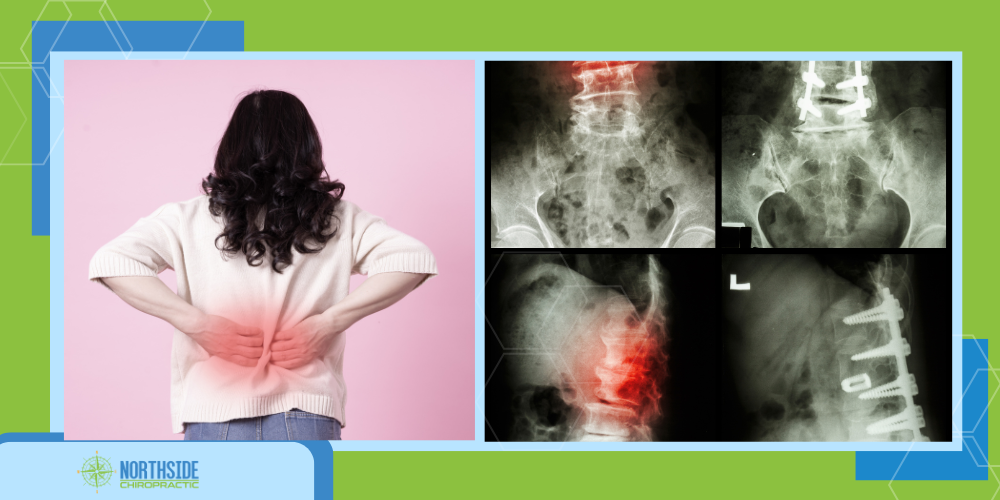
If you’ve been diagnosed with spondylolisthesis, you may be struggling with chronic back pain, leg numbness, or stiffness that affects your day-to-day life. You’re not alone—and you may be wondering, can chiropractic care help with spondylolisthesis pain?
At Northside Chiropractic, Dr. Dustin McIver works with patients who want to avoid surgery and find relief through natural, non-invasive methods. Chiropractic care offers an effective alternative for many people suffering from this condition, especially when the approach is tailored to the individual.
Understanding Spondylolisthesis and Its Symptoms
Spondylolisthesis is a condition in which one vertebra slips forward over the one below it, typically in the lower spine. It’s often caused by a stress fracture (spondylolysis), degeneration, or trauma. This slippage can irritate nearby nerves and lead to:
- Persistent lower back pain
- Pain radiating into the legs or buttocks
- Muscle tightness or stiffness
- Weakness or numbness in the legs
- Difficulty standing or walking for long periods
The severity of this condition is graded on a scale from I (mild) to V (severe), and treatment options vary based on how far the vertebra has moved.
Why Conservative Treatment Matters
For most people with mild to moderate spondylolisthesis, conservative care is the first—and often best—step. Surgery is typically only recommended when pain is severe and other treatments have failed.
Conservative care focuses on:
- Restoring joint mobility
- Relieving pressure on affected nerves
- Strengthening the muscles that support the spine
- Reducing inflammation and improving posture
Chiropractic treatment fits naturally into this model of care by targeting the root cause of symptoms and supporting the body’s ability to heal itself.
Techniques Used for Spondylolisthesis
At Northside Chiropractic, Dr. McIver designs each care plan with the patient’s specific condition in mind. Treatment for spondylolisthesis typically avoids high-force adjustments and instead includes:
- Flexion-distraction therapy: A gentle, non-thrust technique that decompresses the spine and relieves nerve pressure.
- Low-force spinal mobilizations: Safe, controlled movements that restore joint function without stressing the affected area.
- Soft tissue therapy: Techniques to relax tight muscles and reduce inflammation.
- Corrective exercise: Core-strengthening exercises to stabilize the spine and prevent further slippage.
These methods are part of what’s referred to as a spondylolisthesis chiropractic adjustment—a term that emphasizes the gentle, targeted approach chiropractors use for spinal stability.
Is It Safe for My Spine?
Safety is always a top concern, especially with spinal conditions. Chiropractic care is generally considered safe for patients with Grade I or II spondylolisthesis, as long as the spondylolisthesis chiropractor avoids excessive force on unstable segments.
Dr. McIver performs thorough assessments, including imaging review, to ensure that each treatment is appropriate. If a patient shows signs of advanced spinal instability or nerve damage, he will coordinate with other specialists to ensure the best outcome.
Real Results: What Research and Case Studies Show
In a notable case published in the Journal of Chiropractic Medicine, a 43-year-old military veteran with multilevel spondylolisthesis experienced meaningful improvement after just 10 chiropractic treatments. Over eight weeks, his pain levels dropped by 25%, and his functional ability improved by 22%—all without surgery.
This case mirrors what many patients at Northside Chiropractic experience: with the right techniques, chiropractic care for spondylolisthesis can lead to real, measurable relief.
Who Should Consider Chiropractic Treatment?
Chiropractic may be a good option if you:
- Have mild or moderate spondylolisthesis
- Experience chronic low back or leg pain
- Want to avoid surgery or medications
- Have not found lasting relief through physical therapy or other treatments
Dr. McIver takes time to explain every step of the treatment process and helps patients understand what they can do to support their recovery at home.
Final Thoughts: Is Chiropractic Right for You?
So, can chiropractic care help with spondylolisthesis pain? Yes, for many patients, it can. Whether you’re seeking an alternative to surgery or looking for long-term pain management, chiropractic offers a safe and effective path forward.
At Northside Chiropractic, Dr. Dustin McIver is committed to helping you move better, feel better, and regain control over your spine health, without relying on invasive procedures. If you’re ready to explore a conservative, personalized approach to treating your back pain, schedule a consultation today.
Dr. Dustin McIver is a husband, father, and artistic Chiropractor. His creativity and passion for helping others to heal, live and evolve naturally is his driving purpose as well as facilitating a space for healing.
